
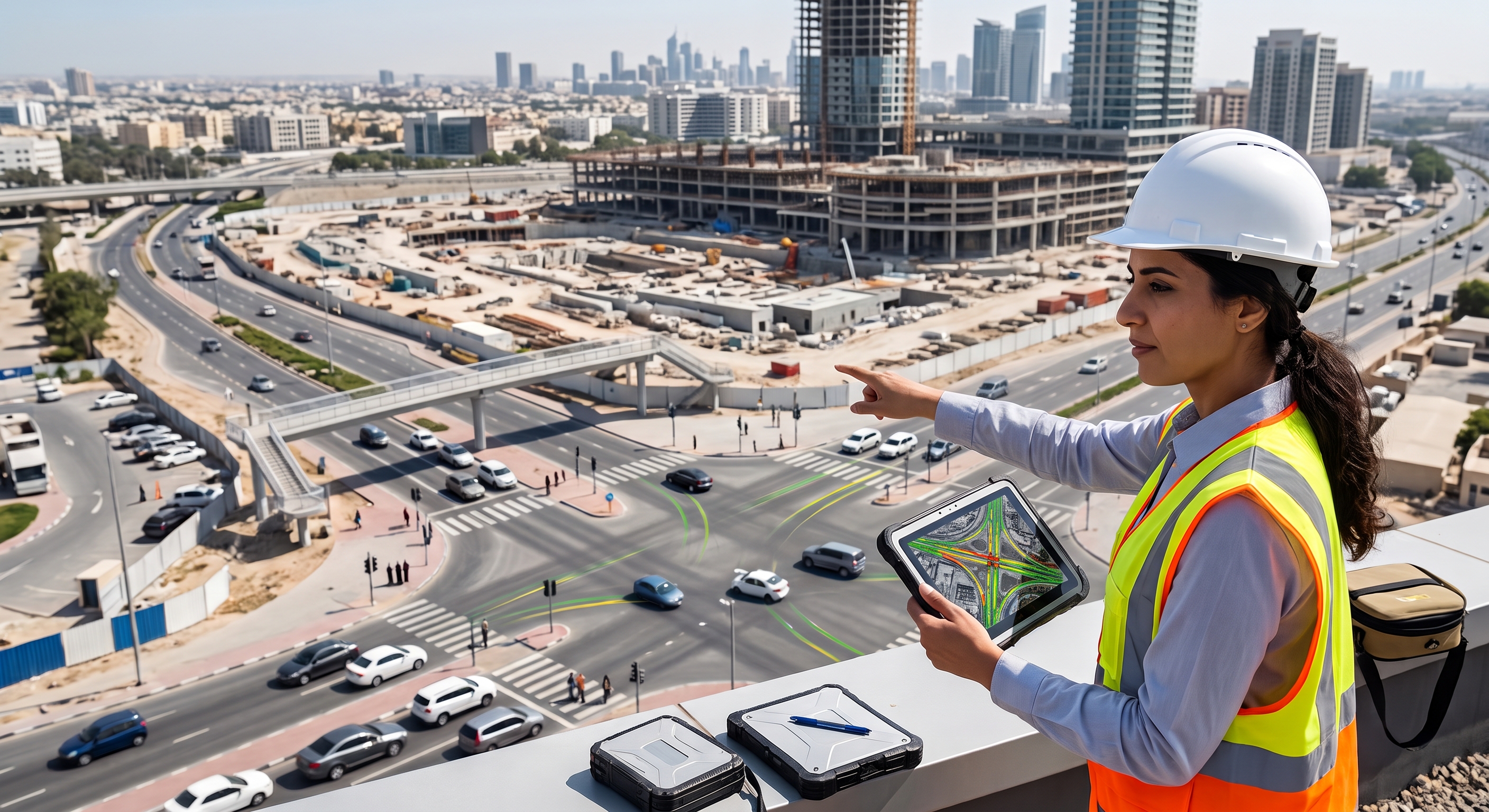
Mega-projects constructed in rapidly developing urban areas impose an immediate and intense pressure on the regional transportation infrastructure. Traffic Impact Analysis (TIA), which minimizes environmental impacts by modeling this change through scientific metrics, is the most vital component of modern traffic engineering. When mixed-use projects, massive hospital complexes, or large campuses become operational, they dramatically increase travel times and intersection delays within existing road networks. Traffic Impact Analysis, an integral part of the building permit processes in developed countries, evaluates the additional burden the project will introduce to the region within a rational framework. The analysis and arrangement of block entrances, parking entrances, and inner-block roads must be designed in detail and verified analytically while still in the planning stage. The preparation of suitability, adequacy, and traffic flow analyses for indoor and outdoor parking facilities, along with parking usage scenarios, is a critical step that guarantees the long-term operational success of the investment.
The preparation of a comprehensive TIA report is a highly sophisticated and multi-layered engineering process. The process begins with conducting directional and vehicle-type-based traffic counts during weekday and weekend peak hours on the main arteries and surrounding intersections that affect the project area. By examining the existing transportation infrastructure, Level of Service (LOS) calculations for the current situation are performed in light of the raw data collected from the field. Subsequently, the population and construction capacity to be generated by the new project are calculated, and future traffic demand forecasts as well as parking demand analyses are formulated.
The obtained projections are transferred to advanced microscopic traffic simulation models to create a digital twin of the region where the facility is located. Through simulation outputs, investors and public authorities can visually test system performance and queuing potentials. The prepared simulation models and simulation videos offer a clear perspective to decision-makers. Thanks to the current and proposed plan comparison reports resulting from the analyses, alternative transportation and traffic regulation projects designed to resolve bottlenecks can be proactively implemented.
In conclusion, the integration of high-volume structures into urban mobility is an engineering problem too delicate to be left to chance. Standardizing the requirement of Traffic Impact Analysis (TIA) for large-scale projects to prevent urban congestion and ensure accessibility is the most powerful key to building the smart, sustainable, and resilient cities of the future.